





 +353 24 904 96

Amplifiers controllers
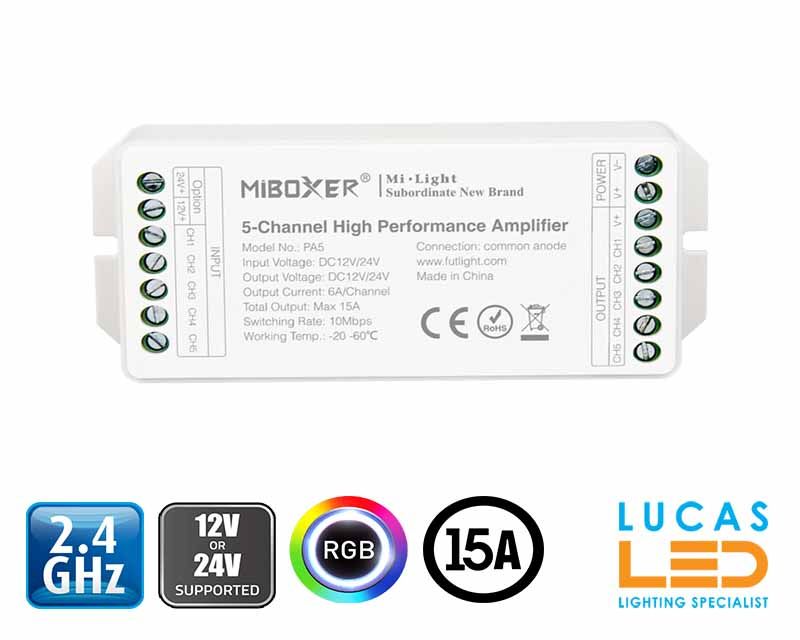
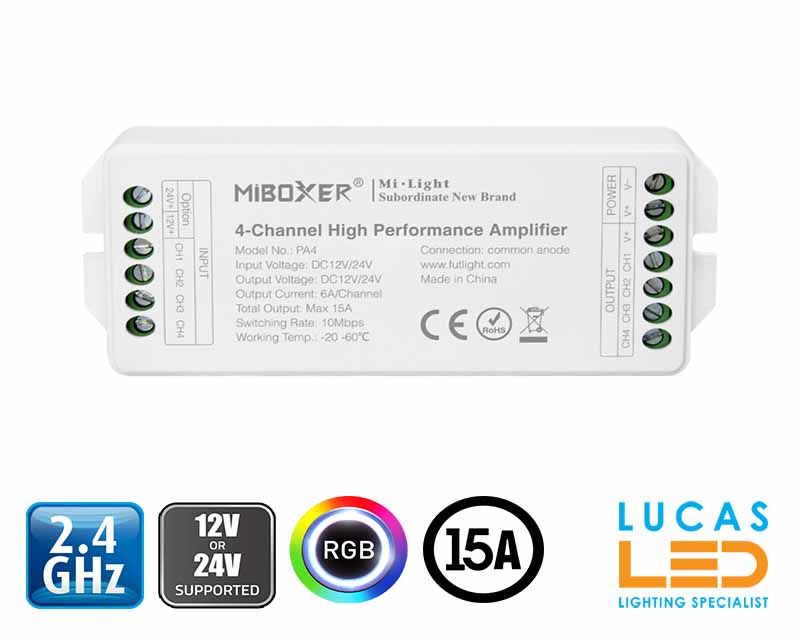
LED amplifier controller - an essential component for anyone looking to expand and maintain the performance of their LED lighting system. If you're planning to connect extensive lengths of LED strips or power multiple segments from a single control source, you've come to the right page. Our LED amplifiers are designed to ensure your lighting setup is both brilliant and reliable, preventing issues like voltage drop and controller overheating. Explore our different types of LED signal amplifiers and find the perfect match for your applications.
These devices are crucial for larger LED installations, especially when using RGB, RGBW, or tunable white smart LED strips. While your primary LED controller (be it a remote control unit, wall panel, or smart Bluetooth / Wi-Fi box) dictates the color and effects, its output power capacity is limited. When you try to exceed these limits, you risk damaging the controller or experiencing dim, inconsistent lighting. This is where an LED amplifier controller steps in. It takes the signal from your main controller and provides additional power to subsequent sections of LED strips, ensuring uniform brightness and color accuracy throughout your entire lighting design. Think of it as a booster for your LED lights, allowing you to achieve lighting schemes that would otherwise be impossible.
Why you need an LED signal amplifier for your LED strips
Understanding when an LED amplifier becomes necessary is key to a successful and long-lasting lighting system. The primary factor is the total power consumption of your planned LED strip installation versus the maximum output capacity of your chosen LED controller.
For example, let's say your LED controller has a maximum output of 10 Amps. If you're using 12V LED strips, this means the controller can handle a total load of 120 Watts (Watts = Volts Amps). Now, imagine your desired LED strip installation involves 15 meters of a strip that consumes 9.6 Watts per meter. The total power consumption would be 144 Watts (15m 9.6W/m). This 144W load would exceed the controller's 120W capacity. Connecting this directly would likely lead to the controller becoming damaged, malfunctioning, or even creating a safety hazard due to overheating.
This is precisely where an LED signal amplifier (sometimes referred to as an LED power amplifier in this context) is essential. By inserting an amplifier after a section of LED strip that is within the controller's limits, you can then connect the additional strip length to the amplifier. The amplifier draws power directly from a separate power supply (or the same one if it has enough capacity) and uses the signal from the controller to drive the next section of strips. This ensures that each part of your lighting setup receives the correct voltage and current, maintaining consistent brightness and extending the life of your equipment. Our website provides detailed specifications for each amplifier controller to help you make an informed decision.
Key features and technical parameters of LED amplifiers
When browse our category of LED amplifier controllers, you'll notice several key features and technical parameters that define their ability and compatibility. Understanding these will help you select the right electronics for your project.
Firstly, consider the operating voltage. Most LED amplifiers are designed to work with common LED strip voltages, typically 12V or 24V DC. It's crucial to match the amplifier's voltage specifications with your LED strips and power supply.
Secondly, the current handling capacity, often specified per channel and as a total maximum, is vital. For RGB strips, this means each color channel (Red, Green, Blue) can handle up to 6 Amps. If you are using single-color strips, you'd look at the total current capacity. The total power rating (e.g., 180W at 12V, 360W at 24V) is a straightforward indicator of how much LED strip length it can support. Always ensure your calculations for wattage or amperage don't exceed these defined limits to prevent issues.
Other features might include the number of channels (e.g., 3 channels for RGB, 4 for RGBW, 5 for RGB+CCT), the type of connection terminals, and the physical size of the box or circuit housing. Some amplifiers are incredibly compact, allowing for discreet installation. The core function remains the amplification of the control signal to provide sufficient power for extended LED runs.
Seamless integration - connecting and setting up your LED power amplifier
The connection and setup of an LED amplifier controller are generally straightforward, allowing you to significantly extend your lighting system with ease. Typically, an LED amplifier will have a set of inputs and outputs.
The inputs are connected to the end of the first section of your LED strip, which is, in turn, connected to your main LED controller (e.g., dimmer, RGB controller, smart home interface). The amplifier effectively reads the signal (dimming level, color information) from this preceding strip section.
The outputs of the amplifier controller are then connected to the beginning of the next section of LED strip you wish to power and control. The amplifier itself also requires a separate connection to an appropriate DC power source (matching the voltage of your LED strips, e.g., 12V or 24V). This power source is what provides the actual energy for the additional LED strips, with the amplifier ensuring they mimic the behavior dictated by the main controller.
With the use of one or more amplifiers, you can effectively connect an unlimited number of LED strips from a single master controller. It’s important to ensure each amplifier and section of LED strip is powered by a power supply unit (PSU) that can handle the load. You can use multiple PSUs for larger installations. By correctly implementing LED amplifiers, you can achieve complex and extensive lighting designs, for example, in large rooms, architectural highlighting, or even integrated into TV backlighting setups that span considerable distances. Remember to check the specifications of each amplifier on its product page before adding it to your basket to ensure compatibility and optimal performance.
LED amplifier controller - an essential component for anyone looking to expand and maintain the performance of their LED lighting system. If you're planning to connect extensive lengths of LED strips or power multiple segments from a single control source, you've come to the right page. Our LED amplifiers are designed to ensure your lighting setup is both brilliant and reliable, preventing issues like voltage drop and controller overheating. Explore our different types of LED signal amplifiers and find the perfect match for your applications.
These devices are crucial for larger LED installations, especially when using RGB, RGBW, or tunable white smart LED strips. While your primary LED controller (be it a remote control unit, wall panel, or smart Bluetooth / Wi-Fi box) dictates the color and effects, its output power capacity is limited. When you try to exceed these limits, you risk damaging the controller or experiencing dim, inconsistent lighting. This is where an LED amplifier controller steps in. It takes the signal from your main controller and provides additional power to subsequent sections of LED strips, ensuring uniform brightness and color accuracy throughout your entire lighting design. Think of it as a booster for your LED lights, allowing you to achieve lighting schemes that would otherwise be impossible.
Why you need an LED signal amplifier for your LED strips
Understanding when an LED amplifier becomes necessary is key to a successful and long-lasting lighting system. The primary factor is the total power consumption of your planned LED strip installation versus the maximum output capacity of your chosen LED controller.
For example, let's say your LED controller has a maximum output of 10 Amps. If you're using 12V LED strips, this means the controller can handle a total load of 120 Watts (Watts = Volts Amps). Now, imagine your desired LED strip installation involves 15 meters of a strip that consumes 9.6 Watts per meter. The total power consumption would be 144 Watts (15m 9.6W/m). This 144W load would exceed the controller's 120W capacity. Connecting this directly would likely lead to the controller becoming damaged, malfunctioning, or even creating a safety hazard due to overheating.
This is precisely where an LED signal amplifier (sometimes referred to as an LED power amplifier in this context) is essential. By inserting an amplifier after a section of LED strip that is within the controller's limits, you can then connect the additional strip length to the amplifier. The amplifier draws power directly from a separate power supply (or the same one if it has enough capacity) and uses the signal from the controller to drive the next section of strips. This ensures that each part of your lighting setup receives the correct voltage and current, maintaining consistent brightness and extending the life of your equipment. Our website provides detailed specifications for each amplifier controller to help you make an informed decision.
Key features and technical parameters of LED amplifiers
When browse our category of LED amplifier controllers, you'll notice several key features and technical parameters that define their ability and compatibility. Understanding these will help you select the right electronics for your project.
Firstly, consider the operating voltage. Most LED amplifiers are designed to work with common LED strip voltages, typically 12V or 24V DC. It's crucial to match the amplifier's voltage specifications with your LED strips and power supply.
Secondly, the current handling capacity, often specified per channel and as a total maximum, is vital. For RGB strips, this means each color channel (Red, Green, Blue) can handle up to 6 Amps. If you are using single-color strips, you'd look at the total current capacity. The total power rating (e.g., 180W at 12V, 360W at 24V) is a straightforward indicator of how much LED strip length it can support. Always ensure your calculations for wattage or amperage don't exceed these defined limits to prevent issues.
Other features might include the number of channels (e.g., 3 channels for RGB, 4 for RGBW, 5 for RGB+CCT), the type of connection terminals, and the physical size of the box or circuit housing. Some amplifiers are incredibly compact, allowing for discreet installation. The core function remains the amplification of the control signal to provide sufficient power for extended LED runs.
Seamless integration - connecting and setting up your LED power amplifier
The connection and setup of an LED amplifier controller are generally straightforward, allowing you to significantly extend your lighting system with ease. Typically, an LED amplifier will have a set of inputs and outputs.
The inputs are connected to the end of the first section of your LED strip, which is, in turn, connected to your main LED controller (e.g., dimmer, RGB controller, smart home interface). The amplifier effectively reads the signal (dimming level, color information) from this preceding strip section.
The outputs of the amplifier controller are then connected to the beginning of the next section of LED strip you wish to power and control. The amplifier itself also requires a separate connection to an appropriate DC power source (matching the voltage of your LED strips, e.g., 12V or 24V). This power source is what provides the actual energy for the additional LED strips, with the amplifier ensuring they mimic the behavior dictated by the main controller.
With the use of one or more amplifiers, you can effectively connect an unlimited number of LED strips from a single master controller. It’s important to ensure each amplifier and section of LED strip is powered by a power supply unit (PSU) that can handle the load. You can use multiple PSUs for larger installations. By correctly implementing LED amplifiers, you can achieve complex and extensive lighting designs, for example, in large rooms, architectural highlighting, or even integrated into TV backlighting setups that span considerable distances. Remember to check the specifications of each amplifier on its product page before adding it to your basket to ensure compatibility and optimal performance.
